Assistant Professor of Behavioral Science — Duke Kunshan University
RESEARCH
Agenda
While scholars debate whether voters’ belief in the very idea of democracy is diminishing, few doubt democracies face serious challenges. These challenges, both old and new, include the rise of populism, increasing polarization, and declining trust in politicians and democratic institutions. At the same time, we have witnessed a legion of democratic experiments. Many of these actively include citizens in decision making, for example deliberative minipublics — randomly selected groups of citizens tasked with rendering recommendations, judgments, or decisions on public issues.
My research agenda centers on these two developments: the challenges facing democracy and the ways to navigate them. Through my research I hope to contribute to our understanding of various broader theoretical issues, such as public opinion formation, collective decision making, civic participation, inter-group conflict, motivated reasoning, social identity, and the role of emotions in politics.
Partisan affective polarization—the degree to which political party supporters dislike one another or their rival party—is on the rise in many countries, but especially the United States. Research shows or suggests that this type of polarization can have political, economic, and social consequences. For example, studies report that affective polarization can increase hiring discrimination and…
Voters often show low levels of accurate policy information owing to misinformation and directional motivated reasoning. Extant research shows that participants in randomly selected deliberative groups—commonly called “minipublics”—can update their beliefs and deliver reasoned policy analysis and recommendations. When distributed to a wider public, such information can bypass motivated reasoning heuristics to improve policy knowledge…
Although sociologists have long recognized the civic effects of workplace structure, extant theory has yet to make sense of growing evidence that civic life also affects what happens at work. The authors leverage the first national, mixed methods study of worker cooperatives—an extreme case of participation in the workplace—to develop a new hypothesis of civic…
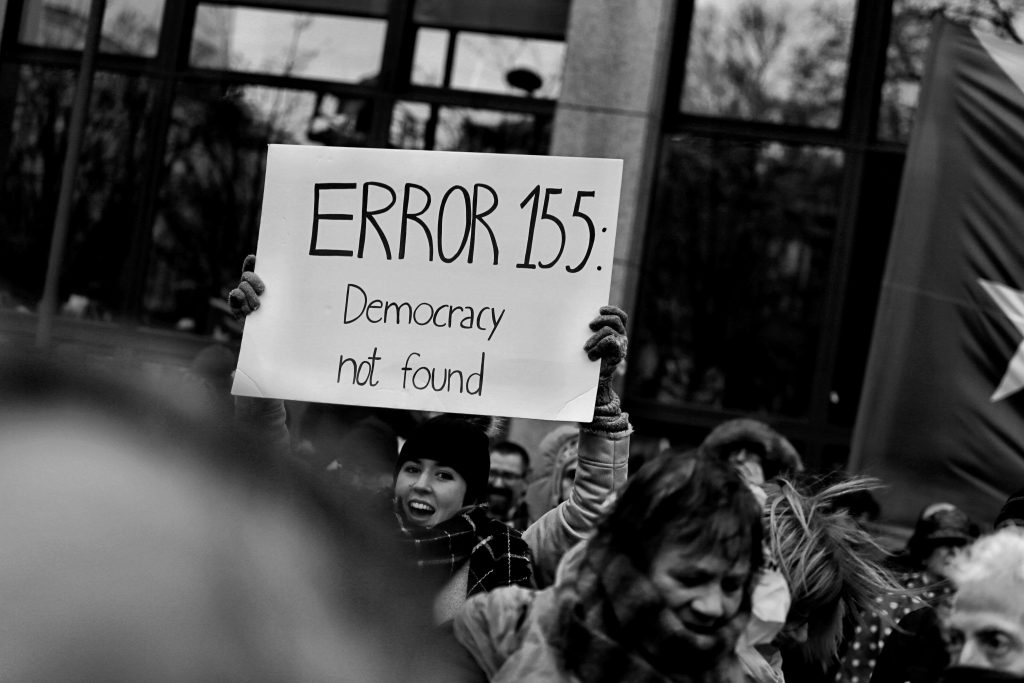 Photo by Randy Colas on Unsplash
 Kristinn Már Ársælsson